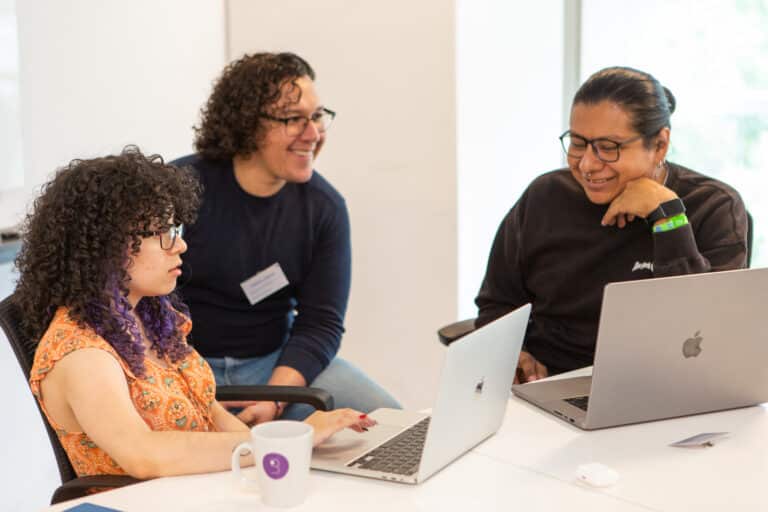


Working with a US engineering team can change more than a developer’s calendar. It can change how they define ownership, communicate technical decisions, participate in disagreement, and measure delivery speed.
The differences are rarely about accents, frameworks, or code style. They are more often about the team’s operating system:
- How much context engineers are expected to find themselves,
- How decisions are documented, and
- How comfortable people are challenging an approach before it reaches production.
That was my experience when I joined a US engineering team. I expected the biggest challenge to be the language, the tools, or the codebase. Instead, the most lasting lessons were about ownership, communication, technical disagreement, simplicity, and sustainable speed.
These are five lessons I learned and the practical ways developers can apply them in any mature, distributed engineering environment.
What Should Developers Expect When Working With a US Engineering Team?
There is no single engineering culture. Companies differ by stage, product, industry, and leadership style. A startup shipping a new product will not operate like a regulated enterprise with hundreds of engineers.
However, developers working with US companies often encounter a common set of expectations:
- Take responsibility for the outcome, not only the assigned ticket,
- Make decisions and context visible in writing,
- Challenge ideas respectfully and support opinions with reasoning,
- Optimize for maintainable solutions instead of impressive abstractions and
- Improve speed by reducing rework rather than increasing pressure.
These habits are not exclusive to US teams. They are characteristics of high-trust engineering organizations, especially those working across countries and time zones.
1. Engineering Ownership Means Solving the Problem
One of the biggest mindset shifts for a developer joining a mature team is the difference between completing a task and owning a problem.
I learned this during one of my first projects with the team. The task appeared to be simple: implement a new chart. In practice, ownership started earlier. It meant understanding why the chart was needed, comparing suitable visualization libraries, testing the riskiest assumptions, and checking whether the result worked for the product and its users.
In practice, that may involve:
- Researching possible technical approaches before writing production code.
- Building a small prototype to compare trade-offs.
- Identifying edge cases that the documentation does not cover.
- Contacting a vendor or open-source maintainer when the expected behavior is unclear.
- Changing direction when the original approach does not solve the underlying problem.
The important distinction is that the engineer remains responsible for the outcome even when the path changes.
How Developers Can Demonstrate Ownership
Ownership does not mean making every decision alone or working without support. It means bringing enough context to the conversation that the team can make a good decision.
Before starting a task, ask:
- What user or business problem does this solve?
- What constraints could change the implementation?
- What assumptions need to be tested first?
- What does “working” mean after the code is merged?
This approach is useful at every level of seniority. It also supports career growth for software engineers because it expands a developer’s contribution beyond individual code changes.
2. Async Communication Is a Technical Skill
Distributed teams cannot rely on everyone being online at the same time. That makes written communication part of the engineering infrastructure.
Before joining this team, I was used to solving most questions with a quick call or another meeting. One of the lessons I learned was that async communication is not a soft extra. The default was often to document the question, explain the context, and keep the discussion visible to everyone who might need it later.
Instead of resolving every question in a meeting, mature remote teams often use pull request descriptions, RFCs, decision records, issue comments, and documented handoffs. The goal is not to eliminate meetings. The goal is to avoid making synchronous availability a dependency for routine progress.
Good async communication gives teammates three things:
- Context: What is happening and why?
- Action: What decision or response is needed?
- Timing: When does the issue need attention?
It also creates institutional memory. A developer who joins six months later can understand a database migration or architecture decision without reconstructing the entire conversation from scratch.
When Should Developers Use Async or Synchronous Communication?
Async communication is usually a strong default for:
- Pull request feedback,
- Technical proposals,
- Progress updates,
- Non-urgent questions and
- Decisions that benefit from a written record.
Synchronous communication is often better for urgent incidents, ambiguous discussions that are creating long message threads, sensitive feedback, and problems where tone or rapid clarification matters.
The right question is not whether async is always better. It is whether the communication method matches the urgency, complexity, and need for shared context.
For developers, the practical takeaway is clear: writing well is not administrative overhead. A concise technical explanation can unblock several people and remain useful long after the original conversation ends.
3. Technical Disagreement Improves the Solution
Engineers joining a new team sometimes avoid challenging an idea because they are concerned about appearing inexperienced or difficult. In strong engineering cultures, thoughtful disagreement is part of the job.
This was a lesson that took me longer to absorb. I initially worried that challenging an idea, especially one proposed by a more experienced engineer, could be interpreted as disrespectful. The goal, I learned, is not to protect the first solution. It is to expose assumptions while changing them is still inexpensive.
Useful questions include:
- What problem are we solving, and what is outside the scope?
- What alternatives did we consider?
- What happens if the current assumption changes?
- How will another engineer maintain this six months from now?
- What is the simplest solution that meets the requirement?
These questions are valuable because software decisions accumulate. A small shortcut can become a reliability problem. A broad abstraction can create unnecessary complexity. A missing failure case can turn into an incident.
How to Disagree Without Creating Friction
Constructive technical debate focuses on the work, not the person. Strong feedback is specific, explains the risk, and suggests a path forward when possible.
Compare:
- “This design is wrong.”
- “This approach may create duplicate writes if the retry happens after the first request succeeds. Could we make the operation idempotent or document the recovery path?”
The second version is more useful because it identifies a concrete failure mode and moves the team toward a decision.
Developers who learn to give and receive this kind of feedback become more effective collaborators. They can defend a decision when the reasoning is strong, and they can change direction without treating feedback as a personal loss.
4. Simple Code Ages Better Than Clever Code
Technical ambition is useful, but complexity is not a sign of engineering quality by itself.
Developers often reach for reusable abstractions, flexible architectures, or generalized components before the current requirements justify them. I have done this myself, and one of the lessons I learned was that an approach can look elegant in a diagram while becoming difficult to review, test, and change.
Simple code is not careless code. It is code that makes the important behavior easy to see.
That usually means:
- Fewer layers than the problem requires.
- Names that explain intent.
- Clear failure behavior.
- Small, focused pull requests.
- Tests around meaningful behavior rather than implementation trivia.
- Abstractions introduced when repeated evidence justifies them.
This is closely connected to effective code review. Google’s Engineering Practices guide to code review emphasizes changes that are understandable, focused, and easy for reviewers to evaluate.
The best implementation is not always the most generic one. It is the one that solves the current problem without making the next engineer decode unnecessary decisions.
5. Sustainable Speed Comes From Reducing Friction
High-performing engineering teams do not necessarily look busy. They reduce the amount of work that has to be repeated.
This lesson surprised me most because I used to associate high performance with constant activity: more meetings, more tickets, more code, and more hours. Working with this team showed me that sustainable speed comes from reducing friction throughout the development process.
Speed improves when teams clarify requirements before implementation, keep pull requests manageable, automate reliable checks, and make decisions visible. These practices may add a few minutes at the beginning of a task, but they prevent larger costs later.
Without that discipline, teams pay for speed through:
- Reopened tickets caused by unclear requirements.
- Large pull requests that take too long to review.
- Production incidents caused by missing test coverage.
- Repeated debates because previous decisions were not documented.
- Developers waiting for answers that exist only in someone else’s memory.
This is why a process can feel slower while the team is actually delivering faster. The team is investing in fewer interruptions and less rework.
For developers, sustainable speed is not about answering every message immediately or writing code for longer hours. It is about making the next step clearer, reducing avoidable handoffs, and leaving the system easier to change.
How These Lessons Support Developer Career Growth
Technical skills remain essential, but global engineering teams also reward the ability to create clarity.
A developer becomes more valuable when they can:
- Translate an ambiguous request into a clear technical problem.
- Explain trade-offs in writing.
- Ask questions before assumptions become defects.
- Give feedback that improves the implementation.
- Choose an appropriate level of complexity.
- Deliver reliably without depending on constant supervision.
These behaviors make collaboration easier for the entire team. They also create more opportunities for impact because the developer can participate in design, planning, incident response, and technical decision-making.
That is especially important for engineers working remotely. Managing remote teams across cultures requires intentional processes, but individual contributors also shape the quality of those processes every day.
Remote collaboration is not only a question of tools. Trust, context, and relationships matter too.
Final Thoughts
The lessons I learned while working with a US engineering team are broadly applicable. Ownership means solving the problem rather than stopping at the ticket. Async communication keeps work moving across time zones. Respectful disagreement improves decisions. Simple code makes collaboration and maintenance easier. Sustainable speed comes from reducing friction and rework.
Those lessons changed the way I work, but they are not limited to my experience or to US-based teams. They are the foundation of mature engineering organizations that expect developers to think clearly, communicate deliberately, and contribute to the quality of the product, not only the quantity of code shipped.
If you are a software engineer looking for challenging projects, international collaboration, and room to grow, explore open positions at BEON.tech.
FAQs
What is it like working with a U.S. engineering team?
The experience varies by company, but developers may encounter stronger expectations around autonomy, written communication, technical debate, and ownership of outcomes. These habits are not exclusive to US teams and are common in mature distributed organizations.
What does ownership mean for a software developer?
Ownership means understanding the problem, evaluating the options, raising risks, following through, and caring about the result after implementation. It does not mean working without support or making every decision alone.
How can developers improve async communication?
Write with context, a clear request, and an expected timeline. Include relevant links, explain what has already been tried, and document the final decision so someone else can understand it later.
How should developers challenge a technical decision?
Focus on assumptions, trade-offs, and risks rather than personalities. Ask specific questions, support concerns with evidence, and suggest alternatives when possible.
Is simple code always better?
No. Simple code is better when it meets the requirements and keeps future change manageable. Complex solutions are justified when the problem genuinely requires them, but complexity should be introduced deliberately rather than by default.
How can developers prepare to join a global engineering team?
Practice written communication, learn to explain technical trade-offs, become comfortable with code reviews, clarify requirements early, and build the habit of working from outcomes rather than only assigned tasks.