

 4.9/5 Clutch
Hire PyTorch Engineers. Elite talent, pre-vetted for excellence.
Boost your IT projects with top PyTorch Engineers from Latin America. At BEON.tech, access top-tier talent, thoroughly evaluated for technical expertise and smooth team integration.

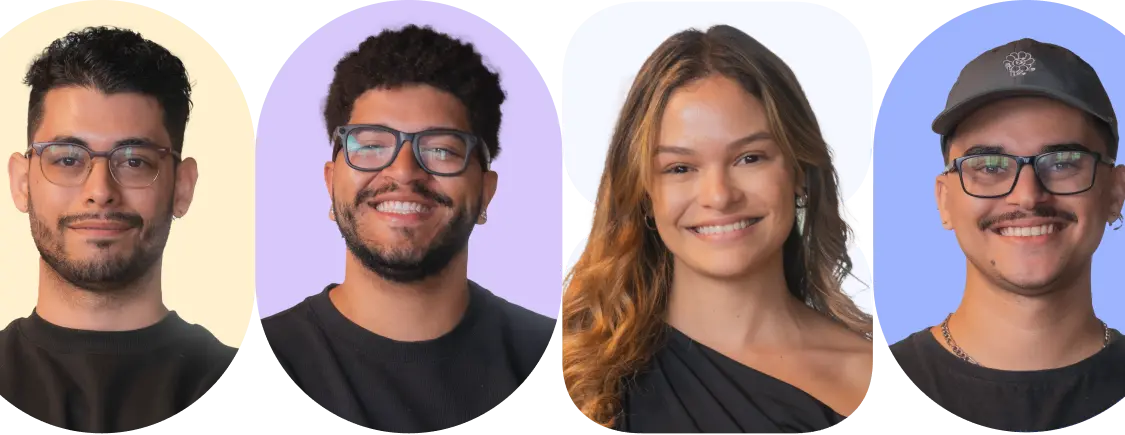
Discover your perfect match
High-quality PyTorch Engineers
ready to add value from day zero.

Federico R  Verified Expert
Senior PyTorch Engineer
UTC -3 Argentina10 years of experience
Federico is a seasoned PyTorch engineer. He specializes in deep learning and reinforcement learning, with experience developing AI models for autonomous systems and robotics. He has led research-driven AI projects and optimized model performance for real-time applications. His ability to innovate and solve complex problems makes him a key asset to any team.

Thiago L Verified Expert
Senior PyTorch Engineer
UTC -3 Brazil9 years of experience
Thiago is an expert PyTorch engineer with experience in NLP and large-scale deep learning models. He has worked on AI-driven automation for chatbots and recommendation systems, optimizing performance for multilingual applications. His passion for AI research and ability to mentor junior engineers make him a strong leader.

Valeria M Verified Expert
Senior PyTorch Engineer
UTC -6 Mexico8 years of experience
Valeria is a PyTorch engineer with extensive experience in building AI models for fraud detection and predictive analytics. She has developed and deployed machine learning pipelines for fintech companies, ensuring high accuracy and efficiency. She is proactive and excels at translating data insights into business value.
Discover your
perfect match
Unlock access to our pool of 52,000 pre vetted professionals ready to drive results.
Partner with the top 1% of Latin American PyTorch Engineers , boasting exceptional technical expertise and strong academic credentials—tailored perfectly to meet your hiring needs.
Get started todayPyTorch Engineers
Interview Questions
Learn everything you need to hire top-performing PyTorch Developers. Our interview guide, crafted by industry experts, gives you crucial questions you should ask candidates to make the best hiring decision.
Read the guide nowOur Proven Process
Hiring PyTorch Engineers
Has Never Been Simpler.
Our Proven Process
Hiring PyTorch Engineers
Has Never Been Simpler.
Discovery call
Review handpicked profiles
Interview & select
Effortless onboarding
Partner with the top 1% of Latin American PyTorch Engineers , boasting exceptional technical expertise and strong academic credentials—tailored perfectly to meet your hiring needs.
Get started today
Trusted by leading media

BEON.tech in Forbes on Adapting Tech Recruitment to Economic Shifts
BEON.tech was featured in Forbes, discussing how businesses can adapt their tech recruitment strategies in response to economic fluctuations.
Read moreThe BEON.tech advantage
Why leading companies choose us
for hiring elite PyTorch Developers.
Why settle for average local talent when you can access the elite? Our exclusive 10-year database includes the top 1% of Pytorch talents in Latin America, carefully vetted by our tech leads to ensure we match you with even the most specialized professionals
Don't wait for too long to fill critical roles. Get your first batch of PyTorch candidates within 24-48 hours. Our streamlined process ensures you receive top-tier engineers who are ready to make an immediate impact
Reduce costs by 30%-50% with top-tier PyTorch Developers from LATAM—an efficient, budget-smart alternative to U.S. resources. Scale your team effortlessly while avoiding complex employment liabilities
From GDPR to HIPAA and other strict regulations, our deep compliance expertise guarantees a smooth and fully secure hiring process, giving you total peace of mind
Collaboration just got easier. Work with engineers in your time zone to ensure effective communication and uninterrupted progress
We don't believe in short-term fixes. With our Talent Experience Management™ Framework, fosters high retention, strong job satisfaction, and a committed team that aligns with your business goals
We look for PyTorch Professionals
with these key capabilities.


Searching for specific roles?
Find related ones.
Support
Any questions?
We got you.
Here you’ll find answers to the most common questions about our process. If you need more details, feel free to reach out!
5 Must-Ask PyTorch Interview Questions & Answers for Hiring Top Engineers
5 Must-Ask PyTorch Interview Questions & Answers for Hiring Top Engineers
Looking to hire skilled Latin American PyTorch Engineers? You're not alone. About 96% of organizations worldwide reported plans to customize Open-Source models, with 61% selecting PyTorch.It's no wonder businesses everywhere are competing for top talent.
However, finding the right candidates starts with asking the right questions. That's where we come in. This article highlights 5 key PyTorch interview questions we use at BEON.tech to identify the top 1% of engineering talent across Latin America, helping companies connect with the best.
Essential PyTorch Interview Questions Every Recruiter Should Ask + Answers
Evaluating PyTorch expertise isn't just about checking resumes, it's about understanding how candidates think, code, and solve real-world challenges. The right interview questions help you assess problem-solving skills, architecture decisions, and practical coding abilities.
We've curated five key technical questions that strike the perfect balance, challenging enough to gauge expertise without being overly theoretical. These questions will help you pinpoint advanced professionals who can contribute high-quality code and seamlessly integrate into your team.
Keeping that in mind here are some advanced PyTorch interview questions for spotting higher seniority levels:
PyTorch uses dynamic computation graphs, also known as "define-by-run" graphs. This means the graph is constructed as operations are executed, allowing for more flexibility during training, especially when the model architecture changes based on inputs. This is particularly useful in tasks that require varying input sizes or when the model structure changes during runtime, such as in reinforcement learning or certain types of RNNs. It contrasts with static computation graphs (like in TensorFlow 1.x), where the graph is defined before execution, making debugging and experimentation harder.
torch.nn.Module is the base class for all neural network modules in PyTorch. It provides a way to encapsulate model layers and parameters. To define a custom model, a developer would subclass torch.nn.Module and implement the __init__() and forward() methods. The __init__() method is where you define layers, such as convolutional or linear layers, while forward() defines how data flows through these layers. An example would be:
class CustomModel(torch.nn.Module):
def __init__(self):
super(CustomModel, self).__init__()
self.fc = torch.nn.Linear(10, 5)
def forward(self, x):
return self.fc(x)
This structure allows PyTorch to track the parameters of the model, manage gradients, and simplify training.
In earlier versions of PyTorch, torch.Variable was used to wrap a torch.Tensor to track operations for gradient computation. However, starting with PyTorch 0.4.0, Variable has been merged with Tensor. Now, all torch.Tensor objects support autograd (automatic differentiation), making Variable obsolete. This change simplifies the API, as there's no need to differentiate between tensors that track gradients and those that don't. So, if you're using PyTorch 0.4 or later, you only need to use torch.Tensor.
Efficient GPU utilization can be achieved by ensuring that both the model and the data are on the same device, typically using .to(device) where device is either 'cuda' for GPU or 'cpu' for CPU. To maximize GPU efficiency:
Use DataLoader with batch sizes that fit into the GPU memory.
Take advantage of torch.cuda.amp for mixed precision training to reduce memory usage and speed up training.
Use DataLoader with num_workers set to more than 0 to parallelize data loading, avoiding GPU idle times.
Efficient memory management is also critical, so clearing unnecessary variables or using torch.no_grad() during inference can help free up memory.
The torch.optim module provides several optimization algorithms to update the model parameters during training. Adam and SGD (Stochastic Gradient Descent) are two commonly used optimizers:
Adam (Adaptive Moment Estimation) is an adaptive learning rate optimizer that computes individual learning rates for each parameter by considering both the first and second moments of the gradients. It’s often used for models with a large number of parameters or when training is unstable because of noisy or sparse gradients.
SGD, on the other hand, uses a fixed learning rate for all parameters and can be more effective when working with simpler models or when fine-tuning a model after it has been pre-trained. SGD is more sensitive to learning rate tuning, but it can converge to better generalizations in some cases. Example:
optimizer = torch.optim.Adam(model.parameters(), lr=0.001)
# For simpler models or tasks where you need precise control over updates
optimizer = torch.optim.SGD(model.parameters(), lr=0.01, momentum=0.9)
What are Common Mistakes to Avoid When Interviewing a PyTorch Engineer?
Now that we've covered the must-ask questions for hiring a expert PyTorch Engineer skilled in efficient GPU utilization, let's explore common mistakes that could derail your PyTorch hiring process:
1. Overlooking Soft Skills
It's easy to focus solely on technical skills, but neglecting soft skills like team interaction and cooperation can backfire. PyTorch Engineers working on, for instance, deep learning model deployment often need to collaborate within a 20-people team, communicate ideas clearly, and respond positively to feedback. Without strong team interaction and cooperation, even the most talented PyTorch Engineer may struggle to connect with the team. This can lead to vague expectations, missed project deadlines, and lack of team collaboration.
2. Ignoring Cultural Fit
Hiring someone who doesn't align with your company's culture or remote work environment can lead to decreasing workforce engagement and continuous employee departures. Employees perform best when their personal work style and values complement the company culture. Prioritizing cultural fit during the hiring process ensures stronger team coordination, greater efficiency, and stable workforce.
3. Neglecting Real-World Problem-Solving
Focusing solely on theoretical tests often misses an essential aspect—how a candidate handles practical challenges in specific areas. While technical quizzes can be helpful, they don't reveal how a candidate thinks through and solves problems in real-world scenarios. This oversight could result in decreasing workforce engagement and continuous employee departures.
4. Failing to Assess Adaptability
The tech landscape evolves rapidly, and PyTorch is no exception. If a PyTorch Engineer isn't open to learning new tools or frameworks, they may struggle to keep up as the industry changes. Prioritizing adaptability ensures your hire will grow with your team and remain effective in navigating evolving challenges.
5. Rushing the Hiring Process
One of the costliest mistakes is rushing to fill a position, especially when the goal is identifying outstanding professionals for sustained progress. Making hasty hiring decisions often leads to mismatches in skills or work style, causing disruptions in team dynamics and project delays. Taking the time to thoroughly vet candidates helps ensure the right fit, saving time and resources in the long run.
Key Takeaways
A well-structured interview process makes it easier to identify PyTorch Engineers candidates who excel in technical expertise and team collaboration. By asking the right questions and evaluating both technical and soft skills, you can build a stronger, more cohesive team.
Build Your Dream Team with BEON.tech Today
You deserve a hiring partner who knows how to deliver. Partner with BEON.tech and experience elite IT talent, tailored results, and unmatched support every step of the way. Let's build your team of tomorrow—today.
Schedule a call