
 Argentina
  Brazil
  Mexico
  Colombia
To hire offshore developers, a US company has four options. It can open a legal entity abroad, use an employer of record, sign independent contractors, or work with a staff augmentation partner that recruits and employs the engineers for you. Most product teams choose the last one, because it is the fastest way to add senior people without taking on foreign payroll and labor law.
Where you hire matters as much as how. India and Eastern Europe offer large talent pools but work while your team sleeps. Latin America offers most of the same savings with a shared workday. This guide covers the regions, the hiring models, the costs, and the risks, so you can build an offshore development team that ships.
What it means to hire offshore developers
Offshore developers are engineers who live and work in another country while they build software for your company. The term usually covers any location outside the US, although many teams now separate offshore from nearshore.
Offshore, in the strict sense, means a distant time zone. India, the Philippines, and Eastern Europe are the classic examples. Nearshore means a nearby country with overlapping hours, which for US companies means Latin America. Both are forms of offshore software development. The difference shows up in how the team works day to day, and we cover it in detail in nearshore vs. offshore.
Why US companies hire offshore developers
The first reason is cost. A senior engineer abroad costs a fraction of a comparable US hire, and the gap is large enough to change what a team can afford. The median US software developer earned $135,980 in May 2025, according to the Bureau of Labor Statistics. Add benefits, and the fully loaded cost is close to $194,000 a year.
The second reason is access. Local markets run short on senior backend, data, DevOps, and AI engineers. Hiring abroad widens the pool and cuts the time it takes to fill a role.
The third reason is speed. A good partner can present vetted candidates in days, not the months a local search often takes. That matters when a roadmap is waiting on headcount.
Where to hire offshore developers
Each region trades cost against collaboration in a different way. This table compares the four most common options for a team based in New York.
| Region | Time difference with New York | Strengths | How collaboration works |
|---|---|---|---|
| Latin America | 0 to 2 hours in most hubs | Senior talent with US experience, strong English, shared workday | Live standups, same-day reviews |
| Eastern Europe | 6 to 7 hours ahead | Deep engineering education, strong in complex backend work | A few shared hours in your morning |
| India | 9.5 to 10.5 hours ahead | The largest talent pool, low rates for well-defined work | Mostly written handoffs |
| Southeast Asia | 11 to 13 hours ahead | Growing pools in the Philippines and Vietnam, low rates | Almost no overlap |
The time difference shifts during the year because the US observes daylight saving time and many of these countries do not.
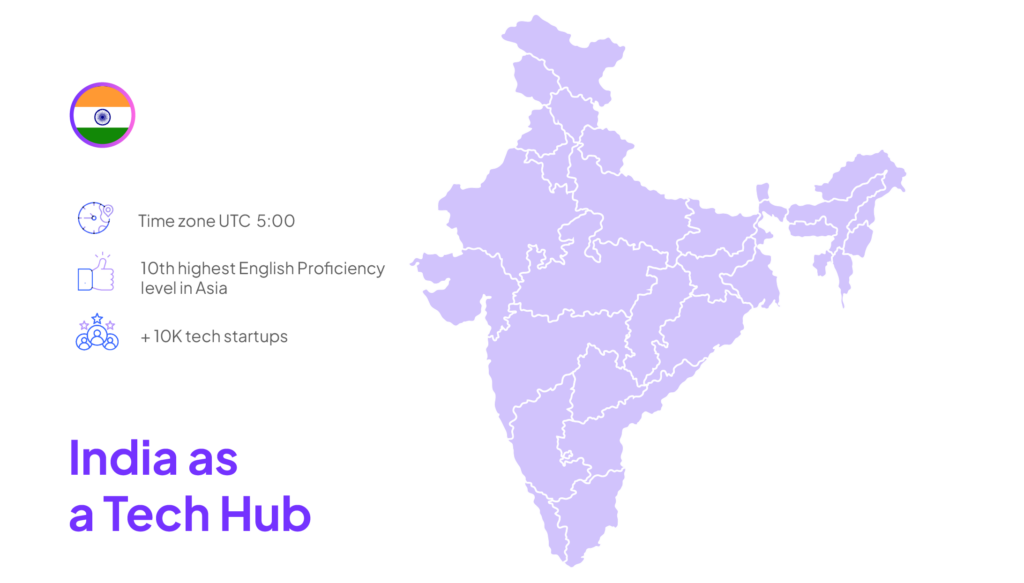
Offshore teams in India and Southeast Asia work best on scoped projects with clear specs. The overnight handoff can even help, since work moves forward while your team is offline. The trade-off appears when requirements change often. A question asked at 4 p.m. in New York gets an answer the next morning, and a two-day loop turns into a week.
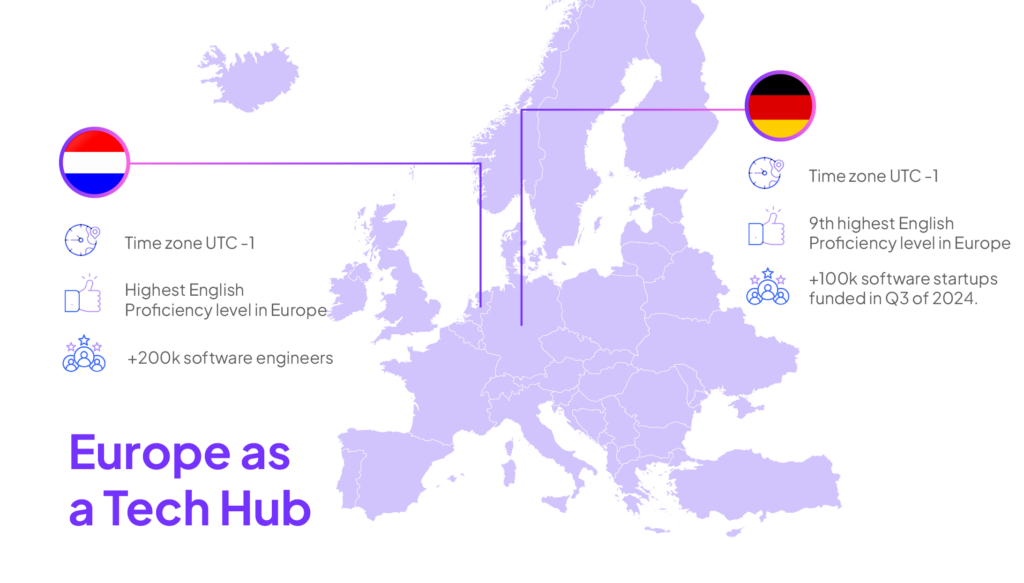
Eastern Europe sits in the middle. Morning overlap makes daily syncs possible, but afternoon work in the US falls outside the engineers’ hours.
Why Latin America works for most US product teams
If your team ships every week, runs agile rituals, and reviews code the same day, Latin America is usually the best fit. It is still offshore in the legal sense. Your engineers live in another country, under another country’s labor law. But they work while you work.
Three things set the region apart. Most tech hubs sit between US Central time and two hours ahead of Eastern time. Many senior engineers have already worked for US companies, in English, with US-style processes. And a senior engineer in a major hub costs roughly half of a comparable US hire, fully loaded.
| Country | Time difference with New York | Average senior cost via BEON.tech (per year) |
|---|---|---|
| Mexico | 1 to 2 hours behind | $96,000 |
| Colombia | 0 to 1 hour behind | $92,400 |
| Brazil | 1 to 2 hours ahead | $99,000 |
| Argentina | 1 to 2 hours ahead | $96,000 |
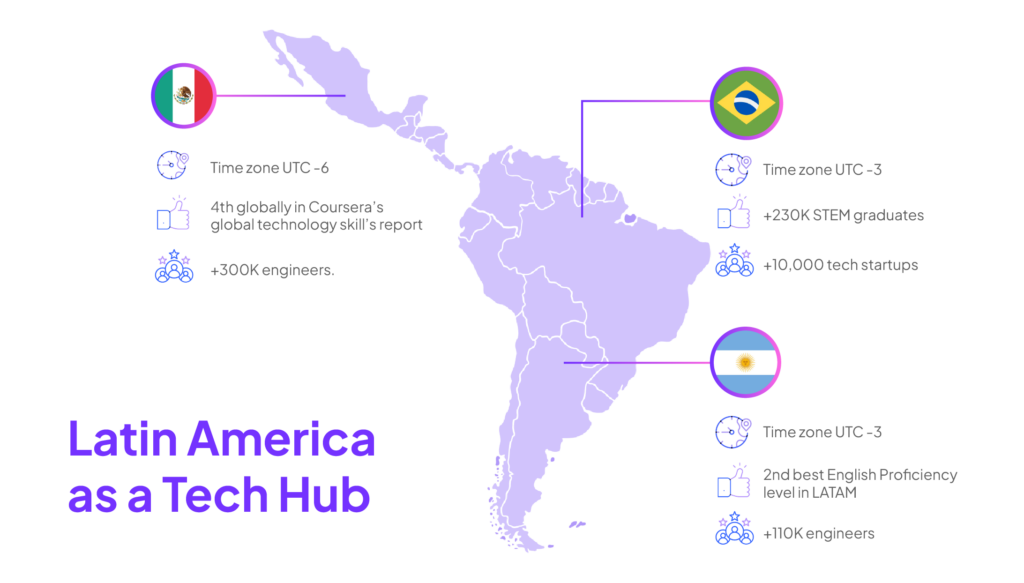
Mexico fits teams on Central and Pacific time. Brazil has the largest engineering pool in the region. Argentina is known for senior engineers with deep product experience. Colombia shares Eastern time for much of the year. For the full process, read our guide to hiring Latin American developers. For a country-by-country view, read the best Latin American countries to hire software engineers or explore the LatAm countries hub. To go deeper on the model, read our guide to nearshore software development.
Four ways to hire offshore developers
The region tells you where the talent is. The hiring model decides who employs the engineers, who carries the legal risk, and how fast you can start.
| Model | How it works | Time to start | Best for |
|---|---|---|---|
| Legal entity | You register a company abroad and hire employees directly | Several months | Large teams with a long-term plan in one country |
| Employer of record | A local provider employs the engineer on your behalf, and you find and manage the person | Weeks, after you find the candidate | A few hires you have already sourced |
| Independent contractors | You sign each engineer directly as a contractor | Days | Short, well-defined work |
| Staff augmentation partner | The partner recruits, vets, and employs the engineers, and they join your team | 2 to 4 weeks | Adding senior engineers to a product team |
Open a legal entity
A local entity gives you full control, but it takes months to set up and needs local accountants, lawyers, and HR. It makes sense once you plan to employ dozens of people in one country. A vendor-managed offshore development center gives you a similar dedicated setup without the entity.
Use an employer of record
An employer of record handles payroll, taxes, and benefits for engineers you source yourself. It removes the entity work but not the hiring work. You still find, vet, and retain every engineer. For the details, read our guide to the employer of record model.
Hire independent contractors
Contractors are the fastest option on paper. The risk sits in classification. When a contractor works full time, on your schedule, under your managers, local authorities can treat the relationship as employment and charge back benefits and penalties. We compare the two paths in contractor vs. remote EOR.
Work with a staff augmentation partner
With staff augmentation, a partner recruits the engineers, runs the technical vetting, and employs them in their country. The engineers join your standups, work in your repositories, and report to your managers. You direct the work, and the partner carries payroll, benefits, and compliance.
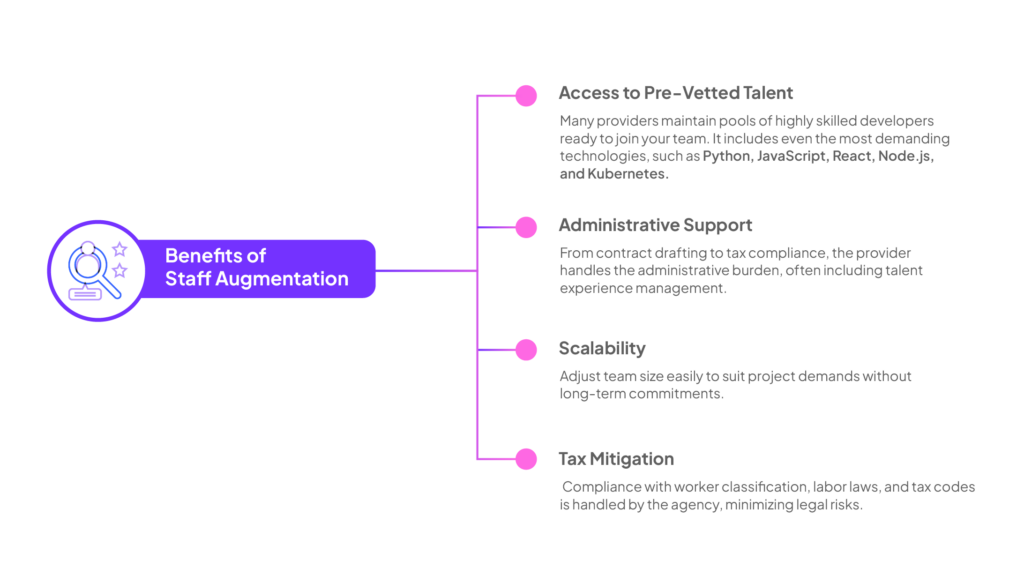
This is the model most product teams use to hire an offshore development team, because it combines speed with control. If you want the partner to run delivery as well, a dedicated development team is the closer fit. Our comparison of software development engagement models shows the options side by side.
How to hire an offshore development team
The steps are the same whether you need one engineer or ten.
- Define the work. Start with the problems the team will own, then list the stack, the seniority, and the hours you need to share.
- Choose the region. Match the time zone to how your team works. Daily collaboration points to Latin America. Scoped, async work can go further.
- Choose the model. Decide who will employ the engineers and who carries the compliance risk.
- Vet for more than code. Test on a realistic task. Check English, communication, and experience on remote teams, not only frameworks.
- Settle the contract. Confirm IP assignment, confidentiality, replacement terms, and notice periods before anyone starts. Our guide on how to structure a staff augmentation contract covers each clause.
- Onboard like an employee. Give access, documentation, and real tickets in the first week, plus a buddy on the team.
How much offshore developers cost
Rates depend on the region, the role, and the seniority. Offshore rates in India and Southeast Asia are often lower than in Latin America, but the savings shrink once you count handoff delays and rework on fast-moving projects.
At BEON.tech, senior full-time engineers from Latin America cost between $5,000 and $9,500 per month in 2026, depending on the role.
| Role (senior, full-time) | Monthly rate at BEON.tech (USD) |
|---|---|
| Full stack, Node.js and React | $6,300 to $7,800 |
| Backend, Python | $6,800 to $8,500 |
| DevOps or platform | $6,800 to $8,500 |
| Data engineer | $6,300 to $8,100 |
| QA automation | $6,000 to $7,300 |
The rate covers salary, benefits, taxes, equipment, and compliance. Every contract also includes a Talent Experience Manager, PTO and national holidays, a co-working allowance, a new MacBook Pro, an internet stipend, and medical insurance. For more detail, read nearshore software development rates or estimate your own team with the developer cost calculator.
Risks of hiring offshore developers, and how to reduce them
| Risk | How to reduce it |
|---|---|
| Tax and labor law exposure abroad | Use a partner or an employer of record that acts as the legal employer |
| Contractors reclassified as employees | Avoid full-time contractor setups that look like employment |
| IP and data security gaps | Require IP assignment and security clauses in every contract |
| Slow feedback across time zones | Choose a region that shares most of your workday |
| Engineers leave after a few months | Work with partners that track engagement and report retention |
| The offshore team feels separate | Keep one backlog, one set of rituals, and shared ownership |
How to manage an offshore development team
The best offshore teams don’t feel offshore. They follow the same rituals, tools, and standards as everyone else.
Keep one backlog and one definition of done. Bring offshore engineers into planning, demos, and retros. Give them ownership of services or features instead of loose tickets. Write decisions down, even when you share hours. And meet in person once or twice a year if you can, because a short onsite builds more trust than months of video calls. For leadership habits across cultures, read how to manage a remote software development team.
FAQ
Can a US company hire offshore developers?
Yes. US companies can hire developers abroad through a local entity, an employer of record, independent contracts, or a staff augmentation partner. Each option carries different costs and compliance duties in the engineer’s country.
How much does it cost to hire offshore developers?
It depends on the region and the role. In Latin America, senior engineers through BEON.tech cost $5,000 to $9,500 per month, all-in. India and Southeast Asia can be cheaper, with less time zone overlap.
What is the best country to hire offshore developers?
For product teams that collaborate every day, Latin American countries such as Mexico, Colombia, Brazil, and Argentina are the strongest fit. For scoped, async work, India and Eastern Europe are common choices.
What is the difference between offshore and nearshore developers?
Offshore developers work from distant time zones, often six hours away or more. Nearshore developers work from nearby countries and share most of your working day. For US companies, nearshore means Latin America.
How long does it take to hire an offshore development team?
With a staff augmentation partner, most hires close in two to four weeks. Opening your own entity abroad can take several months before the first hire.
Hire offshore developers who work on your hours
BEON.tech helps US companies hire senior, AI-fluent engineers from Latin America who work in US time zones. You get qualified profiles within 24 hours, and most hires close in two to four weeks. We handle recruiting, payroll, benefits, and compliance, so your team can focus on shipping. See how nearshore staff augmentation works.